11 May 2026
A new underground SRL East station is coming to Clayton
With the new underground Suburban Rail Loop (SRL) station, Clayton will become a transport super hub, connecting the Cranbourne, Pakenham and Gippsland lines to SRL. It will improve access to vital hospitals and medical research centres.
The new station will connect passengers to more transport options and help deliver more homes and housing choice where people want to live - within walking distance of world-class public transport.
What have we been up to
In Clayton, we're finishing building underground reinforced concrete walls. These walls – called ‘diaphragm walls’ – will form the perimeter of the station box. Since mid-2025, we have successfully installed more than 500 metres of diaphragm walls across the worksite. Soon we'll start excavating the site of the new station.
Tunnel boring machines (TBM) have started arriving in Melbourne, ready for tunnelling on SRL East to begin this year.
Upcoming works in Clayton
Preparing to excavate
Day and night works: 7am Monday to midnight Saturday
Location: SRL Clayton worksite between Clayton, Haughton and Madeleine roads
Ongoing:
- The layout of the SRL Clayton worksite will change as we start digging the station box and machinery used for diaphragm wall construction is taken off site.
- Continued deliveries and movements of large equipment.
- Continued standard size truck deliveries, with oversized loads prioritised at night to reduce local traffic impacts.
Excavation of the station site
Day and night works: 7am Monday to midnight Saturday
Location: SRL Clayton work site between Clayton, Haughton and Madeleine roads
Mid 2026 until mid 2027:
- Excavation of the station site will involve excavating soil from the ground and installing steel reinforcement beams.
This work will involve noise, dust, vibration and light.
Managing dust at the Clayton worksite
How we minimise dust and dirt during excavation:
- Using water trucks to regularly wet down the site
- Cleaning constructions vehicles at site exit points by using controls such as rumble grids to clean dirt off vehicles tyres when they drive over it
- Covering truck loads and soil piles
- Cleaning the roads around the site with street-sweepers
- Maintaining dust monitors on site boundaries
What causes noise, dust and vibration?
The impact of the noise and vibrations depends on the ground conditions and distance between your property and the works. The main sources of noise, dust and vibration are:
- Excavation and rock breaking
- Drilling deep into the ground, known as piling
- Heavy machinery, generators and power tools
We regularly measure air quality, noise levels and vibration to ensure that we are managing these impacts appropriately.
Clayton progress update


How will we excavate the station site?
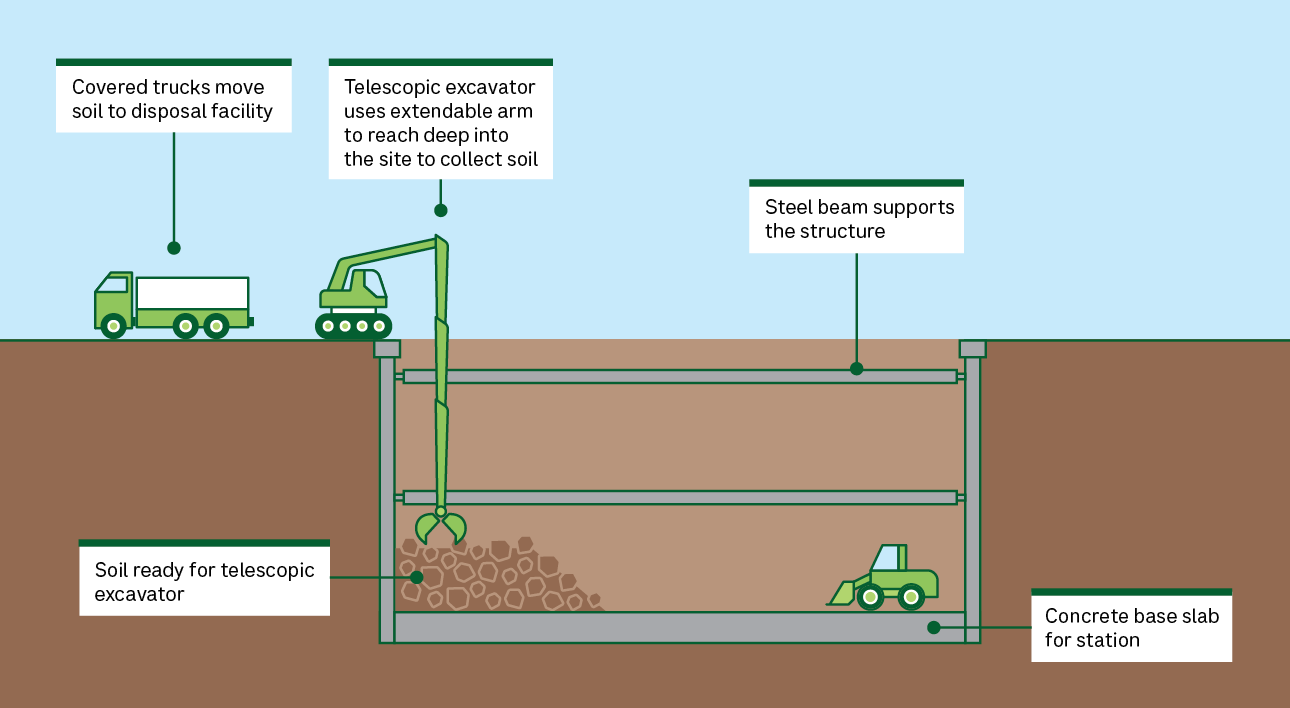
We are preparing to excavate the underground space where the station will be built – the station ‘box’ – ready for tunnel boring machines to pass through after tunnelling begins.
We’ll start by building what's called a capping beam. This will connect all the diaphragm wall panels to create a continuous beam around the station area.
Specialised equipment will be installed to remove groundwater from the worksite during excavation.
With the area prepared, we’ll begin excavation of the station box. This will take place in 3 stages.
One layer of soil will be removed, and steel beams installed. These steel beams support the structure of the station box.
This process is repeated with a second layer of soil and steel beams.
We will then dig to the bottom of the new underground station and pour the concrete base slab. Excavation of the station site is expected to be completed in 2027.
Building the underground connection to the existing station
Excavation beneath the existing elevated rail line is different to the main worksite. This part of the station box is called the ‘adit’ and will form the future underground connection between the existing Clayton Station and the future SRL East station. This location is marked on the map on the next page.
A concrete roof will be installed at ground level to strengthen and support the elevated rail line. We’ll then dig from beneath the concrete slab to remove soil.